15 Essential Questions to Ask a Web Designer Before You Hire Them

Finding the right person to build your website can feel like a huge, overwhelming task. You have this beautiful vision in your head, but you’re worried about finding someone who truly gets it-someone who will capture the real essence of your brand, not just build a generic site. It’s a big investment of your time and money, and the fear of choosing the wrong person is real. Knowing the right questions to ask a web designer is the first step in turning that feeling of overwhelm into one of confident clarity.
This guide is here to be your warm companion through that process. We’re moving beyond the technical jargon to focus on what truly matters: finding a creative partner. Inside, you’ll discover 15 thoughtful questions designed to help you connect with potential designers, understand their approach, and find someone who is excited to co-create a beautiful, authentic online home for your business. By the end, you’ll feel prepared and empowered for your discovery calls, ready to find the perfect partner for your journey.
Key Takeaways
- Start your search with clarity by first defining your website’s primary goal and your own vision for the project.
- Learn how to look beyond a beautiful portfolio to find a true creative partner who understands your business strategy.
- This guide provides the essential questions to ask a web designer, covering everything from their creative process to post-launch support.
- Feel confident and prepared by asking specific questions about contracts, timelines, and budget, ensuring there are no surprises on your journey together.
Table of Contents: Key Questions to Ask a Web Designer
- First, Know Thyself: Prepping for Your First Conversation
- Process & Partnership: Important Questions to Ask Your Web Designer
- Questions About Strategy & Design Expertise
- Questions About Logistics, Timelines & Scope
- Questions About Budget, Contracts & Life After Launch
First, Know Thyself: Prepping for Your First Conversation
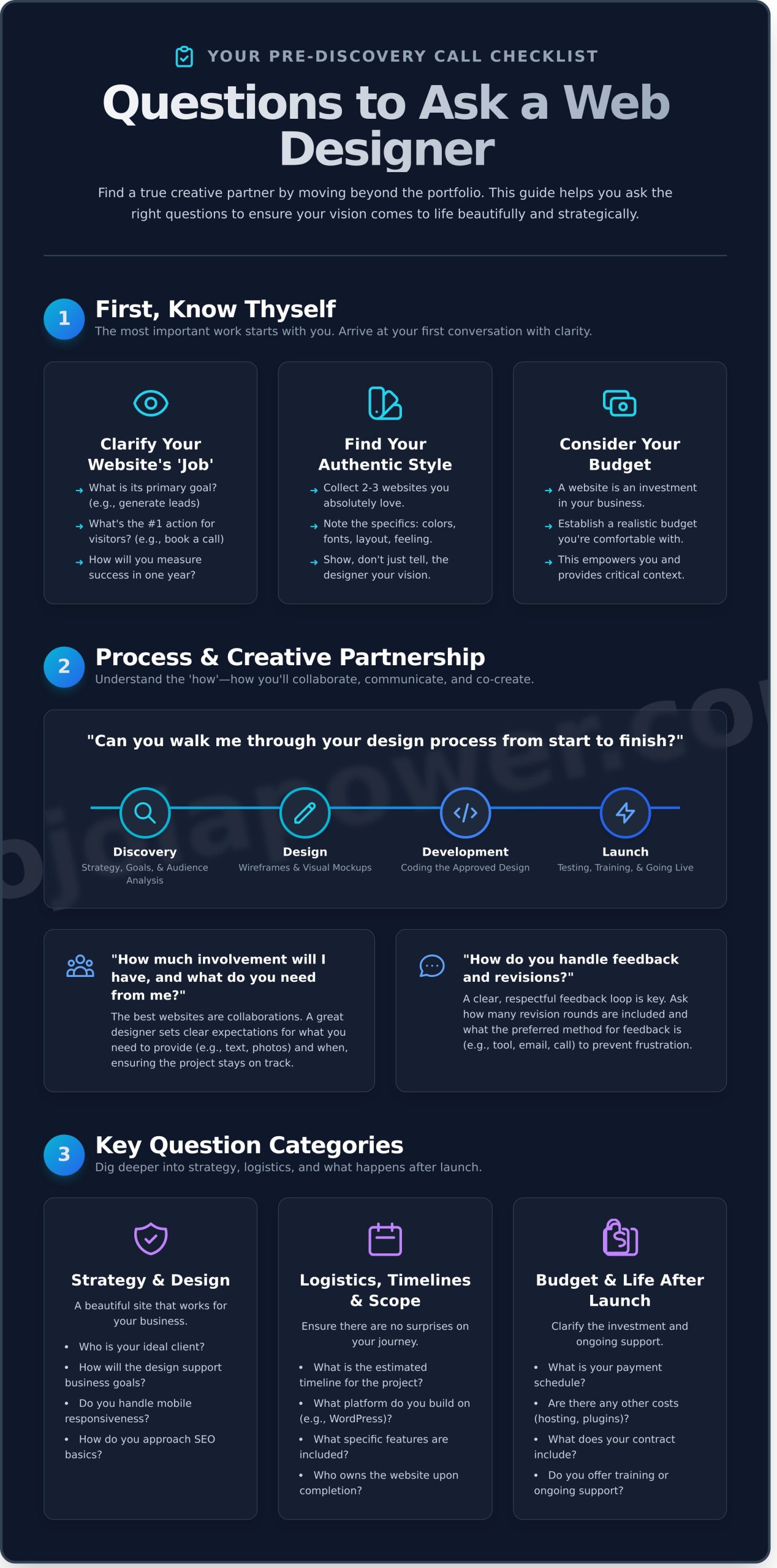
Before you even begin compiling your list of questions to ask a web designer, the most important work starts with you. Think of this process not as hiring a vendor, but as finding a creative partner. We are going to co-create a digital home for your business, and the journey is always more beautiful and effective when you arrive at our first conversation with a sense of your own vision. This initial clarity helps us dive deeper, faster, into bringing your essence to life online.
Taking a little time to reflect on your goals, style, and ideal clients will transform your initial chat with a designer from a simple interview into a true collaborative session. It’s also wise to consider a realistic budget you’re comfortable with. Having these pieces in place empowers you and gives your potential designer the context they need to serve you best.
Clarifying Your Website’s ‘Job’
Every great website has a purpose. It’s not just a digital brochure; it’s an active member of your team. To define its role, gently ask yourself these questions:
- What is its primary goal? Is it to generate leads through a contact form, sell products directly, or establish you as a trusted expert in your field?
- What is the #1 action you want visitors to take? Should they book a call, sign up for your newsletter, or purchase a course?
- How will you measure success? In one year, what result would make you feel this investment was a resounding success?
Finding Your Authentic Style
This is the fun part! Start a small collection of 2-3 websites you absolutely love, even if they are outside your industry. As you gather inspiration, try to notice the specifics. Is it the warm color palette, the elegant font, or the spacious, calming layout that resonates with you? While you don’t need to be an expert, having a basic sense of what web design encompasses can help you articulate your vision. This visual homework is one of the most powerful ways to show a designer the feeling you want to create for your visitors.
Questions About Their Process & Creative Partnership
Beyond the portfolio and the price tag lies the most important part of your project: the human connection. Building a website is a journey we take together, and you want a partner who makes you feel heard, understood, and supported. These questions are about the how-how you’ll collaborate, communicate, and co-create. A designer with a thoughtful process will bring clarity and peace of mind, turning a potentially overwhelming task into an exciting, creative adventure.
Can you walk me through your design process from start to finish?
This is one of the most revealing questions to ask a web designer. A vague answer can be a red flag, while a confident, experienced designer will have a clear, structured path. Listen for distinct phases that show they have an organized system for bringing your vision to life:
- Discovery & Strategy: How will they learn about your business, your audience, and your goals?
- Design & Mockups: When will you see the first visual concepts for your website?
- Development: The stage where the approved design is coded into a functional WordPress site.
- Review & Launch: The final steps for testing, training, and going live.
This isn’t just about a timeline; it’s about understanding their roadmap to capture your brand’s essence and translate it into a beautiful website.
How much involvement will I have, and what do you need from me?
The best websites are born from collaboration. This question clarifies your role in the co-creative process. Will you be responsible for writing all the text and providing professional photos? A great designer sets clear expectations from the start so you know exactly what’s needed from you and when. This ensures the project stays on track and feels like a true partnership. While we’re focused on the creative journey here, it’s also wise to consider the more technical aspects; this list from Forbes outlines some essential questions to ask your web developer about logistics and scope, which can help paint a complete picture of your working relationship.
How do you handle feedback and revisions?
Creative work is personal, and feedback is a natural part of the journey. Understanding a designer’s revision process upfront prevents confusion and frustration. Ask if a specific number of revision rounds are included in your package. More importantly, ask how they prefer to receive feedback-is it through a specific tool, on a call, or via email? A clear and respectful feedback loop is the key to ensuring the final design not only works perfectly but also feels authentically you.
Questions About Strategy & Design Expertise
A beautiful website is wonderful, but a beautiful website that works for your business is transformative. It’s more than just a digital brochure; it’s a strategic partner in your growth. These questions help you see beyond a pretty portfolio and discover if a designer thinks like a true collaborator-someone who is invested in helping you achieve your goals. You want to find a partner who can capture your brand’s unique energy and build a welcoming online home for your audience.
4. Can I see 2-3 examples of websites you’ve designed for businesses like mine?
Looking at a designer’s past work is the best way to understand their real-world capabilities. Pay attention to the overall quality and see if their aesthetic resonates with your own vision. But don’t stop there. Ask what the goals were for those projects and what results they achieved. This gives you insight into their strategic thinking, not just their artistic skill.
5. How do you ensure the website reflects my brand’s unique essence?
This is one of the most important questions to ask a web designer because it separates a true partner from a simple decorator. A great designer will want to go deep, asking thoughtful questions about your mission, your values, and the feeling you want to evoke. Their process should be about co-creating an authentic digital expression of your brand, not just picking out colors and fonts that look nice.
6. Do you design for mobile-first, and how do you test for responsiveness?
In today’s world, the answer to this must be a confident ‘yes.’ Most of your visitors will likely find you on a phone or tablet, so their experience has to be seamless. A follow-up question is to ask if they test on actual devices, not just computer-based simulators. This commitment to detail ensures that every single person who visits your site feels welcome and can navigate it with ease.
7. What content management system (CMS) do you use, and why?
A CMS is the platform your website is built on, and it determines how easily you can make updates later. Their answer reveals their technical preferences and their reasoning behind them. For most small businesses, WordPress offers the perfect blend of power, flexibility, and user-friendliness, empowering you to take control of your content. As WordPress experts, we build sites you can easily manage.
Questions About Logistics, Timelines & Scope
Once you feel that wonderful creative spark with a designer, the next step is to gently map out the practical side of your journey together. This is where we talk about the ‘nuts and bolts’ of the project. Asking these logistical questions to ask web designers isn’t about being difficult; it’s about co-creating a clear path forward. Setting these expectations together ensures our partnership is built on trust and understanding, preventing any future bumps in the road.
8. What is the estimated timeline for the project?
A true professional will be able to give you more than just a final date. Ask them to walk you through the key phases of the project, from initial design concepts to development and launch. It’s also helpful to understand what might cause delays, like waiting on feedback or content from you. A realistic and well-defined timeline is a sign of an experienced partner who respects your time and their own creative process.
9. Who will be my main point of contact, and how will we communicate?
Knowing how you’ll stay connected is key to a smooth and joyful process. Will you be speaking directly with the designer who is bringing your vision to life, or will you work with a project manager? Understanding their preferred way of communicating-whether it’s email, scheduled calls, or a project management tool-helps you find a rhythm that feels supportive and easy for everyone involved.
10. Does your scope include basic SEO setup?
A beautiful website is only powerful if your ideal clients can find it. This is one of the most essential questions to ask a web designer. Clarify if their process includes the foundational technical SEO that helps Google understand your site. This typically includes things like:
- Setting up title tags and meta descriptions
- Optimizing images with alt text
- Ensuring a mobile-friendly structure
Be sure to ask if this is a one-time setup or part of an ongoing strategy, as they are very different services. This initial setup is crucial for giving your new online home a strong start.
Questions About Budget, Contracts & Life After Launch
You’ve shared your vision, explored their creative process, and feel a connection. These final questions are about the practical foundation of your partnership. Moving from creative ideas to concrete agreements can feel daunting, but a designer who is transparent and thoughtful about these details is showing you they are a true professional. These are the last, but most crucial, questions to ask web designer before you commit.
Your website is a living, breathing part of your business, and planning for its future from the very beginning ensures it will serve you for years to come.
11. How is your pricing structured?
Clarity around your investment is essential. A great designer will be happy to walk you through their pricing. Ask for a detailed proposal that outlines every deliverable so you know exactly what you’re getting. It’s also important to understand their payment schedule (e.g., 50% upfront to begin, 50% upon completion) and to ask if there are any other potential costs, like premium plugins or font licensing, that you should be aware of.
12. What are the key terms of your contract?
A contract isn’t about mistrust; it’s about creating clarity and security for both of you on this creative journey. Before signing, make sure you understand the key terms. Most importantly, confirm that you will own the website and all its assets upon final payment. You should also be clear on the process and policies for project changes or, if necessary, cancellation. Getting everything in writing protects your vision and your investment.
13. What happens after the website is launched?
The launch isn’t the finish line-it’s the beginning of your website’s new life! A smooth transition is key to feeling confident and empowered. Ask your designer if they provide training to help you update your new site. It’s also wise to see if they offer a short period of post-launch support (often 14-30 days) to fix any small bugs that might pop up after going live.
14. Do you offer ongoing website maintenance?
A WordPress website is like a garden; it needs regular care to stay healthy, secure, and beautiful. Ask if they offer ongoing maintenance plans to handle things like:
- Regular backups
- Software and plugin updates
- Security monitoring
While you can hire someone else for this, it’s often much simpler to stick with the person who so thoughtfully built your site in the first place.
15. Based on our conversation, do you feel you’re the right fit for my project?
This simple, open-ended question can be one of the most revealing. It turns the interview into a collaborative discussion and invites an honest response. Their answer will tell you so much about their confidence, their integrity, and whether they truly listened to your needs and goals. It’s the final check to ensure you’re not just hiring a designer, but beginning a true creative partnership.
I hope these questions help you find a designer who feels like the perfect co-creator for your vision. If my approach resonates with you, I would be honored to discuss your project. You can learn more at kojolapower.com.
Your Next Step: Finding a True Creative Partner
Choosing a web designer is about so much more than finding someone with technical skills; it’s about discovering a partner who truly sees your vision and is excited to bring it to life. The goal isn’t just to build a website, but to create a digital home that feels authentically you. This list of questions to ask web designer is your guide to moving beyond a simple transaction and finding a true collaborator who understands your business’s unique essence.
If you’re looking for a collaborative, co-creative design process, you’re in the right place. My entire approach is built on a warm, supportive partnership from start to finish, ensuring your voice is heard and honored throughout our journey together. We won’t just build a website; we will capture the heart of your brand.
Ready to co-create a website that feels like you? Schedule a call.
Your story deserves to be told beautifully. Finding the right person to help you tell it is the most important first step.
Frequently Asked Questions
What’s the difference between a custom website and a template-based one?
Think of a template as a beautiful home that’s already built-we can redecorate it, but the floor plan is set. A custom website is one we co-create from the ground up. It’s a deeply personal journey where every element, from layout to functionality, is intentionally designed to capture your unique essence and connect with your ideal clients. While a template can be a great start, a custom build ensures your site is a true, one-of-a-kind reflection of you.
Who is responsible for writing the copy and providing images for the site?
This is a wonderful part of our collaboration! As the expert on your business, you will provide the final words (copy) and images. But please don’t feel overwhelmed-you’re never alone in this process. I provide detailed guides and thoughtful prompts to help you gather your content with clarity and ease. My role is to be your supportive partner, ensuring the words and images we choose feel authentic and align beautifully with the new design.
What happens if I don’t like the initial design concepts?
Please don’t worry! Your honest feedback is the most important part of our co-creative process. If the first design concept doesn’t feel quite right, that’s completely okay. It simply gives us valuable information to get closer to your true vision. We’ll talk through what you love and what you’d like to change, and I’ll create a new version based on your insights. My goal is for you to feel a deep, joyful connection to your new site.
Who legally owns the website once it’s fully paid for?
You do! Once our project is complete and the final payment has been made, you have 100% ownership of your website and all of its files. I believe your website is your digital home, and you should always hold the keys. I will transfer everything over to you, along with all the necessary login information, empowering you with full control over your beautiful new online space. It’s your business, your platform, and your property.
What are the typical ongoing costs for a small business website after it’s built?
After your site is launched, there are just a few essential ongoing costs. Think of them like utilities for your digital home. You’ll have an annual fee for your domain name (your .com address), which is usually around $20/year. You will also need website hosting, where your site’s files live online, which typically costs between $15-$35 per month. I’ll walk you through setting these up so you feel completely comfortable and in control.
How do I know if a designer truly understands my business and my clients?
This is one of the most important questions to ask a web designer. For me, our connection is everything. True understanding begins with deep listening during our initial calls and a thoughtful brand questionnaire that helps me see the heart of your business. I ask questions not just about what you do, but about your “why.” This discovery process allows me to build an intuitive site that feels like an authentic extension of you and speaks directly to your people.